Understanding Network Devices
guide to the essential devices that ensure scalability, security, and speed in today's IT environments.
Introduction: What are Network Devices
Network Devices (also known as Networking Components or Networking Devices) are software or hardware elements which are responsible or enable to transfer data from one user devices to another user devices. They can be physical like Switch or Router, virtual like Firewall or software-defined like Routers.
These Devices are the building blocks of the network that make communication possible between systems, users and applications. From a small remote setups to large datacenters network are used to transfer data or communicate . Every setups like in School, colleges or IT setups , depends on a mix of these devices to ensure smooth communication.
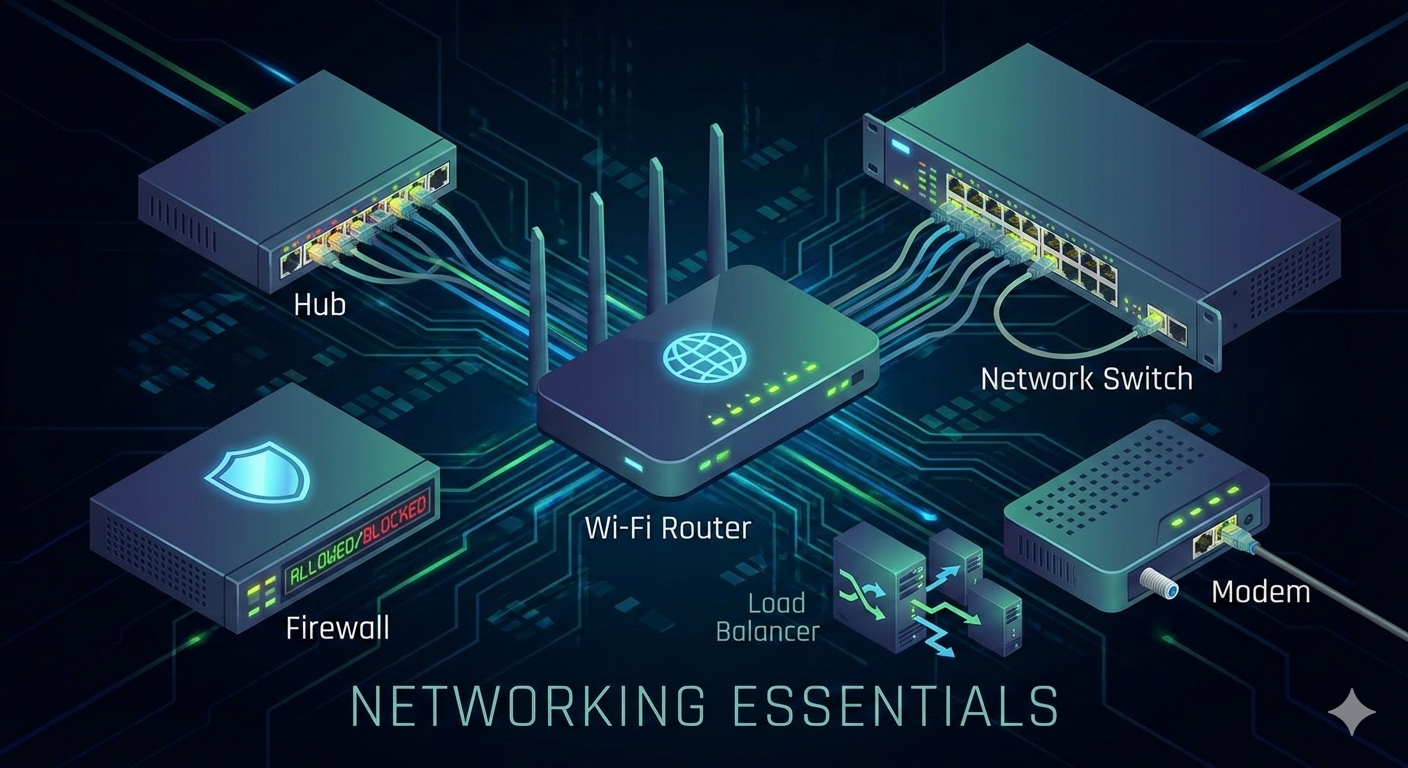
Some of the common Types of Networking Devices are : Modem, Router, Switch, Hub, Firewall, Load Balancer, etc .
What is a Router and how it directs traffic ?
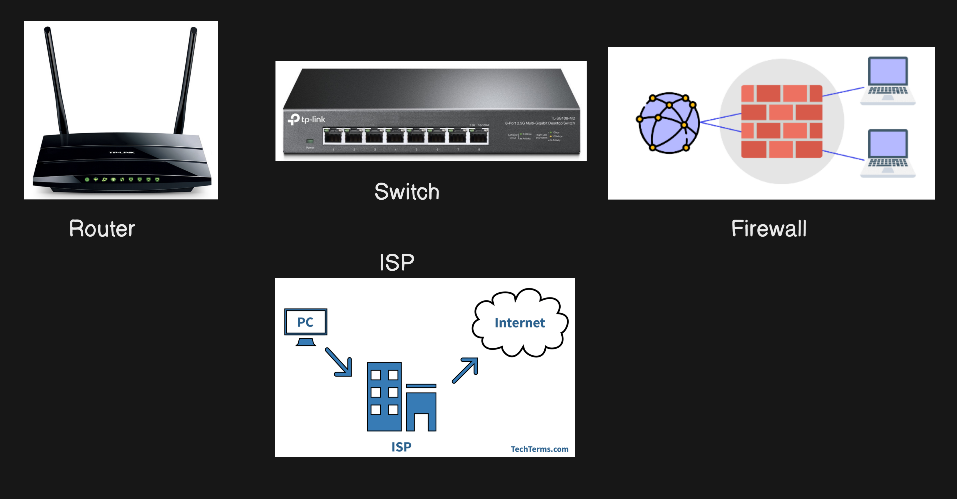
A Router is a networking device that connects multiple networks and directs data packets based on IP addresses.
It manages traffics by directing packets to their intended IP addresses.
For e.g: When you try to access yahoo.com , your request is broken into small packets. These packets dont’t travel directly to Yahoo server rather they pass through series of router that examine and forward them along the most efficient path until they reach their destination.
Routers determine the path for the packets by examining its destination IP addresses and consulting the routing table, which contains the network paths. They use a set of rules to identify the most efficient route of each packets
There are two types of Routing :
Static Routing : Generally for small networks
Dynamic Routing : Automatically updated based on network request, used for large networks.
Switch vs Hub: how local networks actually work?
Hub :
A Hub is simple device that broadcast data to every connected device in a LAN (Local Area Network).
It takes an incoming signal and blindly broadcasts it to all other ports. It does not know who the recipient is.
Hub are being replaced by Switch.
Switch :
Switches are smarter than hubs. They forward data only to recipient (specific port) and supports full duplex communication.
This leads to reduces traffic and improves performances.
What is a Firewall and why security lives here?
A Firewall is a network device that separates a trusted internal network from an external network which is untrustworthy, such as internet.
Firewall regulates the incoming and outgoing network traffic based on pre-defined security rules.
Firewall serves as gatekeeper, which check each network packet and decides whether to permit or block based on pre-set rules.
Today’s next-generation firewalls (NFGWs) have a range of features to make a stronger network security.
These include deep packet inspection, application visibility and control, intrusion detection and prevention, malware defense, URL filtering and many more.
What is Load Balancer and why Scalable systems need it?
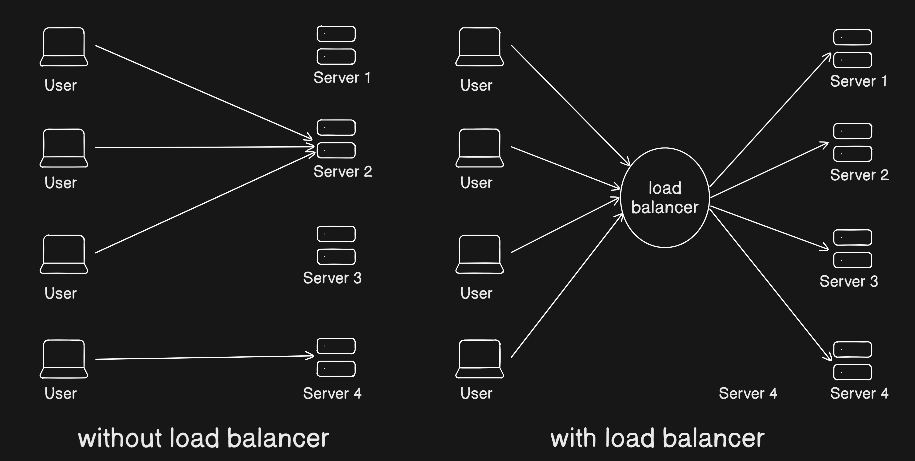
Load Balancing is the process of distributing network traffic efficiently among multiple servers to optimize application availability and ensure a positive end - user experience.
It ensures that no single server bears too many requests at a time.
It leads to help improve the performance, reliability and availability of applications.
When more user came together it automatically works with auto-scaling to add more servers and later remove them when traffic is low.
How all these devices work together in a real-world setup?
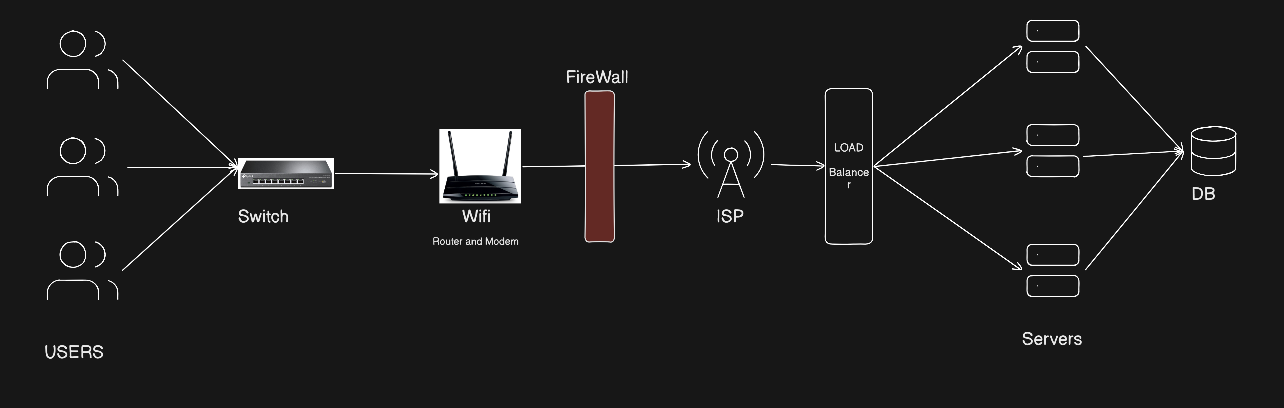
Requests :
The user requests first goes through router.
Then it goes through modem which changes into analog signal (nowadays router/modem are together in wi-fi ).
The analog signal now goes to ISP ( mostly JIO or Airtel).
Then the ISP goes to load balancer and it send the request to dedicated servers for appropriate data
Response:
The server send the response to the Internet .
The Internet then travels to dedicated destination through IP address
Now Internet sends response to the modem
The modem then converts analog signals to digital signals.
The digital signals now gets check through firewall using allows or blocks the response to enter the router or not.
Then router send the data to switch , through switch multiple devices are connected.
Hence, Switch send the response to the MAC address and the user get’s it Response from the Server.